

insert_link
share
close
 play_arrow
The real value of working in the building trades with Dave Ianucci, EAS Carpenters Chris Martin
 play_arrow
Director of Safety and suicide survivor shares how his experience is helping others in construction Building PA Podcast
 play_arrow
Construction companies win when their insurance broker is construction-centric! Building PA Podcast
Jon O'Brien: Hello and welcome to the Building PA Podcast. I am your co-host, John O'Brien from the Keystone Contractors Association, coming to you from Central Pennsylvania. joined as always by fellow co-host and western part of the state legend, Chris Martin. Chris, how are we doing today, sir?
Christopher Martin: Hey, John, how are you? I don't know if the legend part goes, but thank you for that. As always, you introduced me so well and boost my ego. I, you know, your money's in the mail. Thank you. But hey, everyone, I am Chris Martin. I'm with Atlas Marketing and we tell stories for companies that build things. And we're talking about some really, really cool stuff today that's
Jon O'Brien: I'm doing great. Great. Yep.
Tony Bandiero: Matt.
Christopher Martin: statewide, all over the place, that's going to have an impact on so many different people. So John, let's dive in. Who are we talking with today, man? This is some good stuff here.
Jon O'Brien: Today, we're talking clean cities. Today, we're talking transportation. We're talking all fun things, all great things.
Christopher Martin: Stuff we need. We need clean cities. Transportation wise, right?
Jon O'Brien: Um... We do, we do. We have the builders, we have the contractors, they can build whatever you need them to build, but we need them to build clean cities and we need transportation to connect those clean cities. But enough of us.
Christopher Martin: Yeah. That's right. We can't get from Dillsburg to Pittsburgh without it.
Jon O'Brien: And there you go.
Christopher Martin: Okay.
Jon O'Brien: Yeah, so, so if you followed along with the show, I'm quite a legend when it comes to butchering names, and then today... I don't even know if I should even attempt. No.
Christopher Martin: Why do you think I asked you to interview or introduce people? Call me crazy.
Tony Bandiero: Yeah.
Lisa Iadicicco: Yeah.
Jon O'Brien: Yes, Lisa, I had the.
Lisa Iadicicco: I just see go close enough. I just see go, yes.
Jon O'Brien: I see go, I see go from Pittsburgh Region Clean Cities. Tony Badario Bandario.
Tony Bandiero: Bandiero.
Jon O'Brien: Okay, all right. From EPAC. Yeah, EPAC, Eastern Pennsylvania Alliance for Clean Transportation. We're excited to have you guys on. And I'm done butchering names. So now we're just going to stick to first names from here on out.
Christopher Martin: Or that.
Tony Bandiero: Or that.
Jon O'Brien: No, but this is great. But just real quick, just to get our listeners up to speed here. Could you guys maybe take a few minutes, just kind of explain your organization and who you are?
Tony Bandiero: Yeah, yeah, I'll start off, uh, so...
Jon O'Brien: Yeah.
Tony Bandiero: Both of our organizations are part of the Department of Energy's Clean Cities and Communities Program. The program's been around for 34 years, started in 1993 as part of the Energy Policy Act. Basically, in the beginning of the program, it was to help municipal fleets and federal fleets convert to alternatives to gasoline and diesel. So the alternative fuels that we support as organizations for the DOE, there are six. So we support electric vehicles, which we'll be talking about today. We support biodiesel and ethanol, the biofuels. We support renewable and compressed natural gas, we support propane vehicles, and we support hydrogen fuel cells. And along with that, we support anything that helps reduce petroleum consumption within the transportation sector. So be it anti-idling programs or be it right way planning, last mile, planning, all these different things. And we support anything that kind of helps reduce petroleum and idling, we support it. So if it's a petroleum reduction in transportation, it's probably something that we get in touch with. That being said, 10,000 foot overview, there's about 80 of us in the country, 80 different coalitions. that work with the national labs. So we work with NRL, which is the National Lab of the Rocky, National Rocky Lab. We work with Oregon Labs. We work with a host of labs with the DOE. So the information we get and we provide is unbiased. That's what I like to tell people. I go, You know, we tell the good, the bad, and the ugly for these things. Not all these technologies work in every use case. So we support across the board and we are fuel agnostic. So today we happen to be talking about electric vehicles because we are in a project with PennDOT. Before I get into that real quick, Our organization, EPAC, the Eastern Pennsylvania Alliance for Clean Transportation, we're a 501C3 nonprofit. We cover 34 counties of Central and Eastern Pennsylvania. And then PRCC is also a 501C3 nonprofit. And they cover the 33 counties of Central and Western Pennsylvania. So to collectively For the Department of Energy, we cover the whole state between us. You know, that's the 50,000 foot overview is like I said, we're both nonprofits, so we kind of beg, borrow, and do anything we can to get funding to help us move our mission along. So that's the program in a nutshell.
Christopher Martin: Cool, cool. So you mentioned electric vehicles. So help us understand what your collective group, but then individual groups are doing to encourage or impress upon people the benefit, I'm assuming, or the value of electric vehicles versus general transmission vehicles. And I know I completely said that wrong. So, yeah.
Tony Bandiero: Kristen, that's okay. Kristen or Lisa, do you guys want to take that? I mean, I could speak on it, but trying to give you a chance.
Lisa Iadicicco: Well, yeah, well, thank you. Yeah, so we are, you know, we are environmental stewards in trying to get people to understand the environmental issues and also the economic issues in switching over to alternative fuels. There's lots of benefits to do that, not only from an environmental perspective, but also from an economic perspective. So that's what we're trying to teach. And we have a lot of, we have a lot of companies and organizations that have already started to do that. It doesn't have to be a complete switch, but even hybrid is really important. And just understanding. the things that we're doing that we don't even know that we're doing. So Tony had mentioned about idling. I had never even thought about the fact that idling was a problem until we got information, I got the information about how much it affects the environment. So there's just a lot of education that we provide. And I think Education is king. And so that gives people an opportunity to figure out how they can adapt whatever they're doing to help the whole situation. So.
Christopher Martin: And with that, are you looking at like the educational component? Is that on the consumer or on business? Is that like, help me understand which is the focus for your organization?
Tony Bandiero: So. Yeah, yeah. So from the beginning, from the Department of Energy's point of view, is that what moves the needle the fastest are fleets. So we work with fleets of all types. So we work with public fleets, private fleets, municipal fleets, utilities, higher education, you name it, we work with them. We don't, we don't, we work with everybody that wants to do this. So we, We help educate those people to what we're doing, what we do as an organization. And like I said, we're talking about electric now, but it may not be electric that fits their use case. It might be some other type of, you know, technology that they use. Yeah, it could be LNG, you know, and we've done collectively, we've done, you know, since I've been in tenure here at 17 years, and
Lisa Iadicicco: Mhm.
Christopher Martin: But LNG or something, yeah, yeah, yeah.
Lisa Iadicicco: Right.
Tony Bandiero: PRCC has been around for 30 something years as well. We've done hundreds of projects in Pennsylvania, just letting, you know, just by introducing people to the technology. I mean, one of the good things, good and bad, good things for us, for an organization is that the gas and diesel prices are up high. So that's good.
Lisa Iadicicco: Mhm.
Tony Bandiero: because people want to know how to do the other stuff. That's just, so that's good. So personally, not good.
Christopher Martin: You're the first person that's ever said that in about since February.
Jon O'Brien: Yeah.
Tony Bandiero: Well, exactly, and I, and but it's true, our organization ebbs and flows with the price of gas and diesel. So, you know, years ago when Marcellus Shale and they found the gas out there, you know, everybody was doing a natural gas project because they could make a they could make a use case on saving the fuel savings cost, and that's what that's what it is now. So, you know, like I said,
Lisa Iadicicco: Yeah.
Christopher Martin: Sure. Yeah.
Tony Bandiero: I have an electric vehicle. You know, I'm sure NLPRCC has electric vehicles and I, you know, I don't miss that 100 and I do have a truck too. It cost me $140 to fill it every week. You know what I mean? So I drive my electric.
Christopher Martin: I. Yeah, that's fair. That's fair.
Jon O'Brien: Yeah. So.
Lisa Iadicicco: Yeah, and we work with companies like Pitt Ohio is one of our stakeholders. They made the decision. It wasn't necessarily an economic decision, probably, but it was more of an environmental decision. So I think making people understand and enlightening them on What that change could be is really important, and that's part of our mission, so.
Christopher Martin: OK. Mm.
Lisa Iadicicco: Haha. Yeah.
Jon O'Brien: But where do you see it over the next few years and where are we going with this?
Tony Bandiero: Yeah. Yeah, so our organization was one of the first three in the country. We started in 1993. I've been at the helm for 17 years. So 17 years ago, we held our first electric vehicle workshop. We call it TOSEDA, which stands for the only smoke in the air, which comes from our networking BBQ, not the tailpipes of our vehicles. At that meeting, 17 years ago, there was one electric car. It was the Nissan Leaf that did 70 miles on a charge. The only other electric cars we had were people Frankenstein their vehicles or whatever and made them electric. So I have pictures of these things that, you know, people have computer, you know, things in the back of their truck and it's all kind of... just, you know, engineers re-engineered a regular engine to go into this. That's 17 years ago, there was one. Now, I'm tired of talking about electric vehicles because there's so many, there's over 140, 150 things to choose from. So we've seen it go from nothing in my, just in my lifetime, nothing.
Christopher Martin: Yeah.
Jon O'Brien: Mm.
Tony Bandiero: to where we're at now. And today, we're here to talk about some of the other electric, the medium duty, the heavy duty, the construction vehicles that are running on electric that weren't a thing 17 years ago. And to answer your question, moving ahead 17 years, this won't be alternative fuels because a lot of the manufacturers, especially European, have committed to only make electric vehicles, not make internal combustion engines anymore. So that's going to have a huge shift on how we purchase and think about, you know, off-road and over the road vehicles.
Jon O'Brien: Yeah.
Lisa Iadicicco: Okay. We just were participating in our Mid-Atlantic Coalition conference, and they had a Tesla semi there. And everyone was very excited about that. And they're going to be rolling that whole thing out in the next couple of months.
Jon O'Brien: Yeah.
Lisa Iadicicco: So it really has grown to a level that is going to be something that's going to be the norm in the future.
Christopher Martin: Definitely. You mentioned something about, you know, light vehicles, heavy duty vehicles, industrial grade vehicles, and those sort of things. Can you talk a little bit about that? I mean, again, you know, our audience is construction in Pennsylvania. And admittedly, we go beyond Pennsylvania. We kind of cover the whole country, but Talk a little bit about what that means for heavy use equipment.
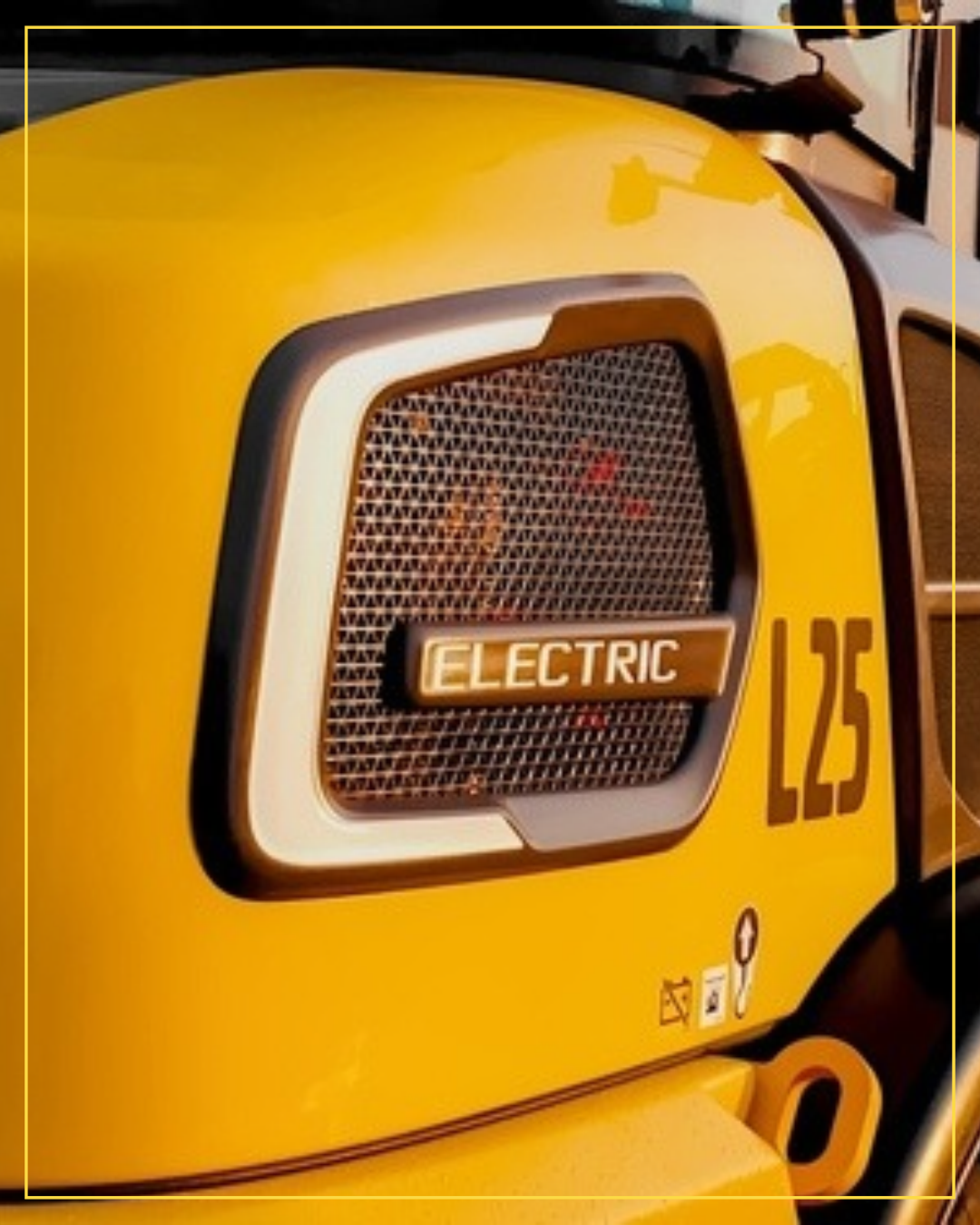
Tony Bandiero: Yeah, that's a great segue into this project that we're working on with PennDOT. So PennDOT got funded with us as partners, PRCC and EPACT as partners, to do a use case test on electric construction equipment off-road. So they purchased an electric backhoe, an electric roller, and then a portable power supply so they can charge it while they're on site. So that was the, and our part of that is collecting data, doing workshops, educating people to what's out there. in this field because, you know, there's a lot of advantages, obviously, to having electric equipment. You can, it's quieter, you can use it, you know, at different times if you're in their city because it's not, you don't have a diesel engine running. It's more powerful because there's electric motors, so there's no like transfer of power like a. transmission or a hydraulic that just goes right to wherever you need it. But the one thing I want to say is there is, we did a report, there's over, I mean, the type, I can list the types of electric vehicles that you can purchase right now that are off-road. So we have excavators, wheel loaders, backhoes, skid steers, graders, bulldozers, aerial lifts, trenchers, wheel tractor, scrapers, asphalt pavers, and that's just to name a few. And then, yeah, an asphalt roller, which we have, but all the major manufacturers like Case, Volvo, they're all making these all electric
Christopher Martin: Yeah.
Tony Bandiero: machines. Okay, so you know it's not like it's far away. It's they have them out now and you can purchase them right now and use them right now.
Lisa Iadicicco: Mhm.
Christopher Martin: Yeah. With your program so far, like, like, tell us a little bit, like, what have you seen? Like, you know, first off, I guess, let me ask this. When did it start and what are the, what are the results thus far, if anything?
Tony Bandiero: Christy, you want to chime in?
Kristen Sabol: Well, we're just in the process of getting rolling with this project. So we're inviting basically different construction companies to come out and see what we have of it, see what's available, see some of the different equipment, and they can provide feedback into us. And then we'll be compiling that information for the Department of Energy at the end of the project. So our first event is actually coming up with Tony's Tosita event, which is August.
Tony Bandiero: 19.
Lisa Iadicicco: 19th.
Kristen Sabol: 19th, yes. Lisa, do you want to give the rest of the schedule?
Lisa Iadicicco: Yeah, so we do. Oh.
Christopher Martin: But before, Lisa, before you do that, can I, for those listening, that was Kristen Sable, and she's with the, she works with Tony and Lisa. Sorry, I just wanted to just wanted to say that.
Tony Bandiero: Yeah.
Jon O'Brien: There you go.
Tony Bandiero: Sorry about that, yeah.
Lisa Iadicicco: Yes, so we do have upcoming events to create awareness for this. So August 12th, we're doing a webinar with Case, who does all the, what Tony just said, all of the construction vehicles, just to, again, to educate people. We've got Tony's event, Tostita, the EV workshop, which is going to be August 19th in Philadelphia. I heard it's a great event. It's great BBQ. So I would like to come to that.
Tony Bandiero: Yeah.
Jon O'Brien: Nice.
Christopher Martin: Got cheese steak? What's going on?
Tony Bandiero: And.
Lisa Iadicicco: Oh my gosh, right? Oh, thanks, Chris. That's great.
Tony Bandiero: That's so stereotypical. That's so stereotypical. When's the last time you had a BBQ in the middle of a city? That's a little, you know.
Jon O'Brien: Yeah.
Christopher Martin: Yeah, I guess, hey.
Jon O'Brien: Haha.
Lisa Iadicicco: Ohh my gosh.
Jon O'Brien: Yeah, there you go.
Christopher Martin: Good point. Okay, fair enough. Fair enough.
Lisa Iadicicco: So the next one is going to be an actual demo with the case construction, off-road construction vehicles. That's going to be in Carlisle, PA, and that's on September 23rd. So we hope that some of your listeners would want to join us during that event. And then Kristen and I and Laura, we host October 2nd, our event is Odyssey Day, which will be in Pittsburgh, Pennsylvania, which will have not only EV, but all kinds of alternative fuel vehicles there. So we hope that you can join us at those events.
Jon O'Brien: Nice. Carlisle's right down the road from me, so I'll have to pop in. Hopefully the schedule is open, so.
Tony Bandiero: Yeah. Yeah, that event's a lunch and learn too. So it's going to be like, we're going to go out and then we'll eat lunch and then kick the tires. They're actually going to have like live demos of the equipment. The other, the other in-person one, like my in-person one, well, those just be on display, but there'll be people be talking about it because we're in the city. They're not going to dig up asphalt, I don't think.
Lisa Iadicicco: Yeah.
Jon O'Brien: Yep. Yeah.
Tony Bandiero: on the, and it's at the Community College of Philadelphia. So it's at their automotive tech center. So plenty of room and it's always a really great event. This year, like I said, other than showing, you know, class one and two vehicles, we're trying to be specialty. I have an electric boat coming. I have hopefully the Tesla. Chuck, come in. I have an electric suite St. sweeper. I have motors, electric motorcycles. We have all kinds of different transportation nodes that are going to be there. So it's going to be, should be an interesting event for everybody.
Jon O'Brien: Nice.
Christopher Martin: I have to admit, never thought of an electric boat.
Tony Bandiero: Me neither, until I saw it.
Jon O'Brien: Yeah.
Christopher Martin: I, I mean... Quite honestly, like as you're talking, all I can think of is that Jason Bateman show where the girl electrocutes the guy on the boat. So I know that's not exactly what we're going to, and we're going to take that out. Ozark, that's the word. But like, yeah, yeah, yeah. But that's what I'm thinking of. Like, as soon as I hear electric boat, I'm like, those two things don't go together.
Jon O'Brien: Yeah. Yeah.
Tony Bandiero: Yeah.
Lisa Iadicicco: Oh my gosh. Ozark. I love that though. That was so good. That was such a great series.
Jon O'Brien: Yeah.
Tony Bandiero: Ozark, great move, great series. That was a great series.
Jon O'Brien: Yeah. Nice. Yeah. Haha. Nice. So earlier, I think Lisa made mention about a Mid-Atlantic conference, and then Tony mentioned how there's chapters all across the country. So how do we rank? How does Pennsylvania construction industry, where are we like in the mix compared to other states?
Tony Bandiero: Yeah.
Lisa Iadicicco: Oh my goodness.
Tony Bandiero: Well, I don't know exactly, but I'm sure California is way ahead of us on all this stuff. So, you know, they have a lot of mandates. They give a lot of money to companies for doing this stuff. So that's, I think that's the key right now is that, you know, if you get money to do it, then it's kind of a no-brainer to do it because, you know, the equipment's better. It's
Lisa Iadicicco: Mhm.
Jon O'Brien: Yeah.
Lisa Iadicicco: I don't know.
Tony Bandiero: required or less, you know, operator fatigue, things like that. Pennsylvania is progressive though on its EV, 0 emission vehicles. So like I said, this is new. So people are still kind of testing the waters of off-road equipment and electric equipment because it's something they've never dealt with before. So there's, You know, if somebody's used to running a diesel fleet, then they know the issues and what can happen and how to fix it. If somebody gets a brand new piece of electric equipment out there in the field and they're whatever, 30 miles from electric or something and there's a problem, then that's another headache that they have no idea how to fix. And, you know, a lot of people, and I've been doing this for 17 years, are afraid of change. I mean, that's always the scariest thing is try something new if you're not used to it and then investing in it. That's another, that's a whole nother story. So, you know, most businesses that are using the electric construction equipment, sometimes they have in their contracts, the builder wants them to use, you know, green
Jon O'Brien: Mhm. Yeah.
Tony Bandiero: The good thing about electric is it's made in Pennsylvania. So whether it's made by coal or natural gas or however nuclear, it's made here. So that's one of the, so we like that aspect of using domestic fuel to make the vehicles, whereas gasoline,
Lisa Iadicicco: Biofuels.
Tony Bandiero: And diesel are, you know, piped in, uh, so another advantage.
Christopher Martin: Yeah.
Jon O'Brien: Yeah.
Christopher Martin: But.
Jon O'Brien: Yeah. You mentioned the grants in California, you know, contractors seeking seeking grants. Is that currently happening and happening in Pennsylvania? And if so, are there any sort of mistakes companies are making when seeking these grants? Any sort of lessons learned over over the years that you've seen?
Christopher Martin: The...
Tony Bandiero: Yeah, go, go, Chris.
Lisa Iadicicco: Well... So we were just awarded this NEVI grant for the whole state to help with the corridors for electric chargers. So that's a big deal. Both of us, Tony's already started with the project because it really started on the eastern side. We're just kicking that off. where we can, as a coalition, Pittsburgh region, Clean Cities, can help these municipalities writing grants to get money. And it's not completely funded by NEVI, but the majority of it is funded by NEVI. So we're looking to, again, educate people the fact that this money is out there for them. if they want to do some infrastructure changes for electrifying their areas. So.
Christopher Martin: Yeah.
Lisa Iadicicco: And we write grants too for them, regardless, whether it's NEBI, that's part of the, that's part of our mission to help other people understand that.
Tony Bandiero: Serve them.
Jon O'Brien: Yeah.
Tony Bandiero: Yeah, and that is a big part because a lot of like municipalities and things, they just don't have the manpower to, you know, write a grant. So that's why organizations like ours, you know, we're 501C3, we know how to do it. You know, we've been, like I said, I've done 90 successful since I started, like 98%
Lisa Iadicicco: Mhm.
Tony Bandiero: successful on Pennsylvania grants. So there's this one grant that's out now. It's due in October. It's called the Alternative Fuel Incentive Grant. So it incentivizes fleets to convert to alternatives. There's one part for vehicles, one part for infrastructure, and then the third part for innovative technology. So that's
Jon O'Brien: Mm.
Tony Bandiero: that's open right now. And it's all the grants, no matter what, are reimbursement grants. So people have to lay out the money 1st and then they get reimbursed after the project, you know, they finish.
Jon O'Brien: Okay.
Christopher Martin: Pardon my ignorance, Lisa, you mentioned NEVI. I'm assuming that's the National Electric Vehicle Institute or something to that extent. Did I guess it right? Infrastructure. Okay. All right. And then the other thing too is, you know, our listeners, you just heard Tony say, he's got a 98% win streak here.
Tony Bandiero: Infrastructure, infrastructure.
Lisa Iadicicco: Yes, and yeah.
Jon O'Brien: No. Nice.
Tony Bandiero: Pretty good.
Christopher Martin: Call the guy. He'll help you get the money if you're interested. Come on, you know.
Jon O'Brien: Yeah. Yeah.
Tony Bandiero: Yeah, yeah, and at least, at least I can, the nice thing is, even if you're not ready now, walk you through it, teach you about it. I mean, now, like I said, once the prices of gas and diesel are so high, people are looking for other ways, you know, so electric, electric is actually, you know, really good on, depending on the use case. It works in a lot of use cases now that gas and diesel are so high. You know, so, you know, just come talk to us and we can we can do fleet profiles. We'll go through your fleet and see how many miles you do every day, how much, you know, how many hours you put on the engine, how much is cycling, and then we can put it through calculation tools and say, hey, you know what? This might be the best tool for you. Maybe it's maybe it's we're talking about electric today, but maybe it's not. Maybe it's a propane.
Lisa Iadicicco: Maybe it's broken, yeah.
Tony Bandiero: Or maybe it's a natural, yeah, yeah. So, there's different technologies and we just give you, you know, we give you the tools and the advice and then we help you, you know, hold your hand, walk you through it if we get, if you're ready to take your step. And it's nice to take a step. You don't have to jump in, you know, if you have a fleet of, you know, 100 vehicles, you don't have to go all in. You go in with two, try it out, see how you like it, figure it out, and then move on.
Jon O'Brien: Yeah.
Tony Bandiero: From there.
Jon O'Brien: Nice.
Christopher Martin: And, and how can you know, where should where should our listeners go? Like, how do they like, what's your website or you know, is it is it one website for the whole state or is it 2 because we're Pennsylvania and we have to have, you know, a left and a right type of thing?
Tony Bandiero: No.
Lisa Iadicicco: Yeah.
Tony Bandiero: Yeah, yeah, we're East Coast, so, so we're different.
Christopher Martin: Yeah, yeah.
Jon O'Brien: Yeah.
Lisa Iadicicco: Yeah.
Christopher Martin: Yeah, yeah. Like, I've lived in Pennsylvania all my life, but I'll never be able to get over that, right? Like, come on.
Jon O'Brien: Yeah.
Tony Bandiero: Yeah, we're different over on the East Coast. Well, even Philadelphia is different than even the rest of my territory. You know, so, you know, Phil, I always, I'm from New Jersey originally, so I always thought Philadelphia should be part of New Jersey. And then the rest of the state is Pennsylvania.
Jon O'Brien: Yeah. Yeah. Yep, yeah.
Christopher Martin: Yeah.
Jon O'Brien: I second that. I second.
Lisa Iadicicco: Yeah, I heard that actually.
Christopher Martin: Yeah, yeah, you'll get no arguments, really. I mean...
Tony Bandiero: Yeah.
Jon O'Brien: Yeah.
Tony Bandiero: Yeah, yeah, you're not because I've got, when I first started, I used to, you know, go and we used to be called the Greater Philadelphia Clean Cities. I'd be up in Lancaster or Allentown there, like Philadelphia, what are you doing here? You know what I mean? Just the word Philadelphia. So we had to get rid of the word. But yeah, so you can get contact us. Our website is www..
Jon O'Brien: Yeah.
Christopher Martin: Yeah.
Jon O'Brien: Yeah.
Christopher Martin: Yeah, yeah, yeah.
Jon O'Brien: Yeah.
Tony Bandiero: EP hyphen act.org. That's ours and Kristen or Lisa.
Lisa Iadicicco: And ours is PRCC. Oh, wait, I'm sorry, Pittsburgh Clean Cities.org.
Tony Bandiero: Is that what yours is?
Lisa Iadicicco: I think so. I should do that. You can take this out. Go ahead, tell the website you can take that out.
Tony Bandiero: And then, Chris, tell him about our... I. Yeah, tell us what the other one we have is together, Kristen.
Jon O'Brien: Yeah.
Kristen Sabol: Yeah, so then we also have what we call the Drive Electric Pennsylvania Coalition, which is an effort that is a partnership between the two Clean Cities Coalitions and PennDOT and Pennsylvania Department of Environmental Protection. So we have a website out at driveelectricpa.org. And you can get any kind of information about driving electric there from, you know, starting with the basics to looking at your fleets to looking for incentives and upcoming events that we have scheduled coming down the pike.
Jon O'Brien: Okay. Yes.
Tony Bandiero: And one last thing I want to tell you is that we talked about 80 coalitions. We're all like a fraternity. We share, we share good, the bad, the ugly on our, you know, we want our projects to work. You know, this is new technology for some people. Sometimes they work, sometimes they don't, sometimes there's issues. But what we're really good at is networking between us. So if you have a fleet,
Lisa Iadicicco: I.
Tony Bandiero: a construction fleet that has, you know, people in New Jersey, New York, you know, wherever we can, we have the connections to hook them up in the other states as well, not just Pennsylvania. So that's one of our, I think our strong points is that is that connectivity that we have as an organization, as a national organization is to help you get help anybody who has vehicles or wherever they have them. get started on this alternative fuel conversion.
Jon O'Brien: Yeah. Yes. Speaking of that, though, of helping contractors, is there is there a role for a contractor association like the KCA beyond just promoting the events? Is there any any role we can play to assist in the process? We represent site contractors, you know, construction managers, you know, you name it.
Christopher Martin: That is a nice.
Tony Bandiero: Absolutely. Yeah, yeah, absolutely. Yeah, absolutely. We got...
Jon O'Brien: Everything, everything in between, so.
Lisa Iadicicco: Yeah.
Christopher Martin: Sounds like a lunch and learn at the KCA offices.
Jon O'Brien: Yes, yeah.
Lisa Iadicicco: Well, yeah, yeah, I think so too. I think just having sort of a demo day for people would be important. And if you all can go to Carlisle for the event on September 23rd, that would be good too. But we certainly will come to you. so that we can, you know, educate your stakeholders. So.
Tony Bandiero: Yeah, and it just doesn't have to be electric. You know, we're good that we have, you know, relationships with all the OEMs, so we can bring, you know, whatever you guys want to, you know, if you're looking for a natural gas cement mixer, you know, or whatever, we, you know, there's, we have that, those connections that, you know, it's not just electric, so it's
Jon O'Brien: OK.
Lisa Iadicicco: Yes.
Tony Bandiero: just maybe something that'll help them with some with one of their other types of vehicles that works, you know, on natural gas or runs on propane, you know, we can we can bring in the experts in those technologies and then just do presentations so that people can understand what's the difference between, you know, a natural gas vehicle, a propane vehicle, one that runs on diesel, you know, all that. So We can definitely get them all the information they need.
Jon O'Brien: Awesome, thank you.
Christopher Martin: Good, good. Well, Lisa, Tony, Kristen, thank you so much for joining us today. This has been really, really informative, really helpful. And I'm going to make one plug again for driveelectricpa.org. So if you have any questions, feel free to visit that site and that'll get you in touch with Lisa, Tony, and Kristen. So Thank you again for joining us and telling this important story. This is really cool.
Tony Bandiero: For sure. Yep, and if, like I said, if you need any information, just give us a call or e-mail us, and we will help where we can.
Lisa Iadicicco: Absolutely. Thanks, Chris. You saw me.
Tony Bandiero: Thank you. Thanks for your time. We appreciate it.
Kristen Sabol: Thank you.
Jon O'Brien: Thanks. Thank you.